

The Overlooked Role of Back-of-House Floor Protection in Food Service
Customers never see the kitchen floor, but anyone who has worked a busy service shift knows what it goes through. Grease builds up fast. Water gets everywhere. Staff are moving quickly between stations for hours at a stretch, and the floor takes the full force of all of it.
Front-of-house gets most of the attention when it comes to presentation and upkeep, which makes sense. But the back of house is where the real wear happens, and when the floor becomes a hazard, it affects everything from how safely your team can move to how long your facility holds up.
At A-1 Service, we work with food service operations across Louisiana that understand that what happens behind the kitchen door matters just as much as what the customer sees. The right kitchen floor mats are a straightforward part of keeping that space safe and functional, shift after shift.
Why Kitchen Environments Demand Specialized Floor Protection
A commercial kitchen does not make floors easy to shift. Grease builds up around cooking stations, water collects near dish areas, cleaning chemicals are used regularly, and staff move across all of it throughout the entire service. The conditions change from zone to zone and shift to shift, which is exactly what makes standard floor solutions fall short.
OSHA’s guidelines for restaurant kitchens specifically call out grease and water as persistent floor hazards, noting that floors should be cleaned often with grease-cutting solutions and that slip-resistant flooring should be installed near hot surfaces and cooking appliances.
That guidance exists because the hazards in a kitchen do not stay put. A prep station that is manageable during one shift can become slick during the next.
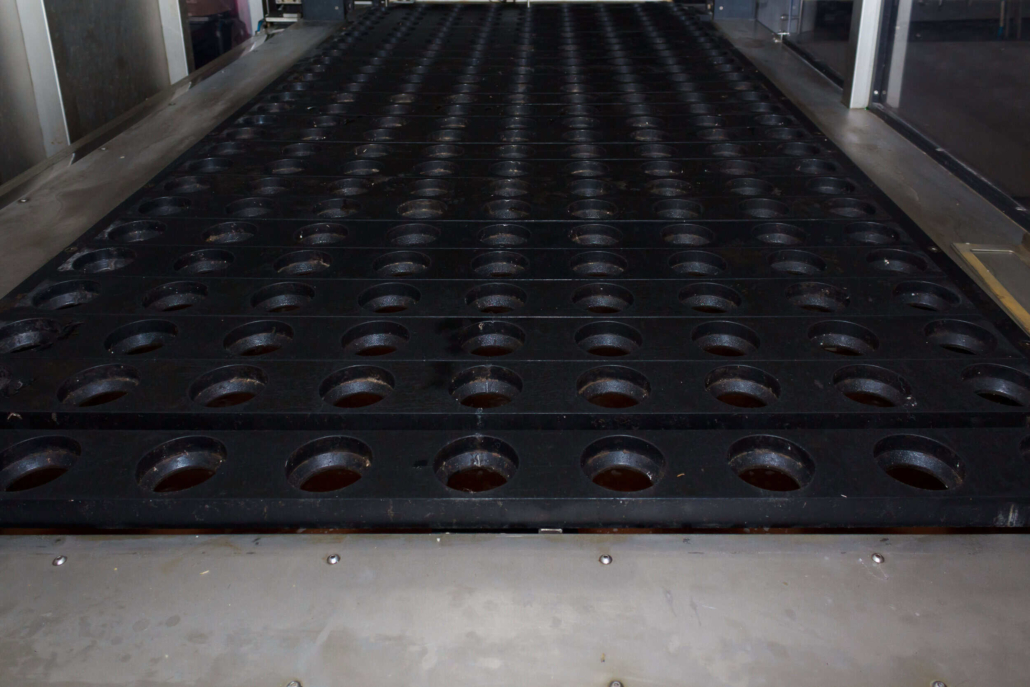
Kitchen floor mats provide a controlled surface that absorbs these changes. Instead of allowing grease or moisture to spread across tile or concrete, mats contain it at the source, keeping conditions more stable during the hours when your team can least afford a floor-related incident.
How Floor Conditions Affect Staff Movement
Back-of-house operations depend on speed and coordination. Staff carry trays, move between stations, and work around hot equipment. When flooring becomes unreliable, movement slows down.
Even slight changes in traction can disrupt workflow. Employees adjust their steps, hesitate at transitions, or take longer routes to avoid slick areas. Over time, this affects productivity and increases fatigue.
A consistent matting surface helps maintain predictable footing. At A-1 Service, our kitchen mats are designed with nitrile rubber, which resists grease and oil while maintaining grip. This allows staff to move with confidence, even during the busiest periods.
Reducing Physical Strain During Long Shifts
Standing for an entire shift on a hard kitchen floor takes a real toll. It builds up in the legs, moves into the lower back, and by the end of service, it affects how people move and how sharp they stay.
The research backs this up:
- A study published in PubMed found that after four hours of standing, discomfort was measurably reduced when workers stood on anti-fatigue mats compared to a hard surface.
- A Loughborough University study found statistically significant benefits when subjects stood on anti-fatigue mats, with participants reporting serious discomfort in the feet, legs and back when standing on concrete without mat support.
Kitchen floor mats with anti-fatigue properties do not change the pace of service, but they help staff maintain that pace. When employees are not fighting the floor beneath them, they can stay focused on the work in front of them, which matters more during a busy shift than most people realize.
Managing Grease and Debris at the Source
One of the biggest challenges in food service environments is controlling where contaminants spread. Grease from a cooking line can travel quickly when carried by foot traffic. Water from dish areas can extend beyond its original zone.
Without proper floor protection, these substances move freely across the kitchen. This increases cleaning demands and creates inconsistent conditions throughout the space.
Kitchen mats act as containment points. Their surface captures debris, while their structure holds it below foot level. This limits how far contaminants travel and helps maintain cleaner work zones between scheduled cleanings.
Why Mat Fit and Placement Matter in Kitchens
Not all kitchens share the same layout. Equipment placement, walk paths, and workstations vary from one operation to another. Using standard-sized mats without considering layout often leaves gaps in coverage and creates inconsistent floor conditions.
At A-1 Service, we work with businesses to place mats where they are needed most. Instead of forcing multiple smaller mats into a space, custom sizing allows for better coverage and fewer interruptions in the walking surface.
A properly fitted and positioned mat improves how the entire kitchen functions. Key considerations include:
- Coverage across main walk paths: Mats should follow natural movement patterns between stations, not sit off to the side where they are underused.
- Alignment with workstations: Prep areas, cooking lines, and dish stations benefit from targeted mat placement that matches where employees stand most often.
- Minimizing gaps between mats: Gaps allow grease and moisture to reach the floor, which reduces the effectiveness of the matting system.
- Reducing mat movement during service: A correctly sized mat stays in place and reduces shifting, which helps maintain consistent footing.
When mats match the layout of the kitchen, they support daily operations instead of working against them.
Keeping Mats Functional Through Regular Service
Kitchen conditions require more than a one-time solution. Mats collect grease and debris throughout the day, and their performance depends on consistent maintenance.
Our service model removes soiled mats and replaces them with clean ones on a set schedule. Used mats are taken to our South Louisiana facilities for professional laundering using modern systems designed to restore their condition.
This process ensures that mats continue to perform as intended. Staff do not need to manage cleaning or replacement. They simply receive mats that are ready for use.
Supporting Kitchen Operations Where It Matters Most
Back-of-house areas do not receive the same attention as customer-facing spaces, but they carry the workload that keeps the business running. Floor conditions in these areas affect safety, staff performance, and overall efficiency.
At A-1 Service, we focus on providing mat solutions that support these environments day after day. Our kitchen floor mats are built for the realities of food service and maintained through consistent service.
If your kitchen is dealing with shifting mats, inconsistent footing, or increased cleanup demands, our team can help design a program that fits your operation. Contact A-1 Service to learn how better back-of-house floor protection can improve performance where it matters most.
 info@A1ServiceInc.com
 (800) 899-DUST
